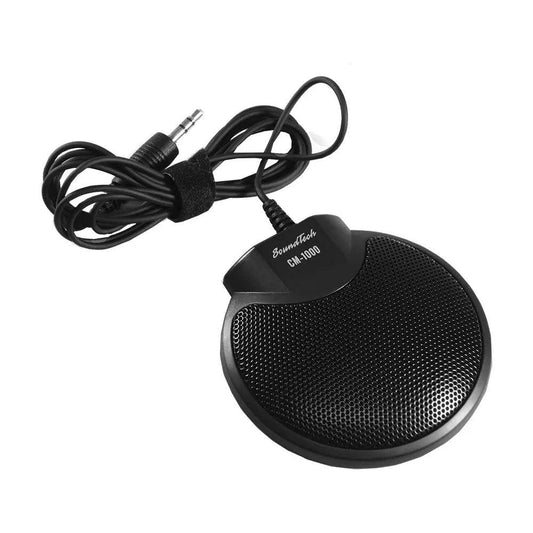
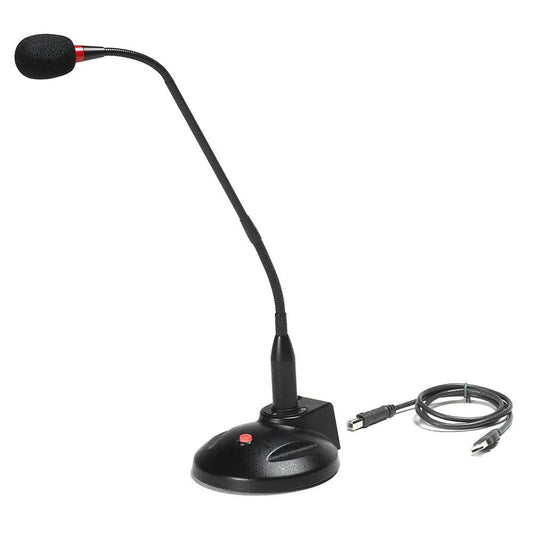
Everyone deserves to be heard. And recorded. Every day, American Dictation helps school boards, city councils, and executive boards capture every murmur, every question, and every voice. Depending on your venue and your budget, American Dictation can deliver a recording solution to meet your needs.
When recording meetings, conferences or other gatherings, it's important to arrange your microphones to capture everyone's voice or all the music. Each situation may require different microphones and different arrangements.
The tabs to the right will help you understand how you can arrange microphones to best capture all the necessary sounds.
While all the conference kits we offer do quite well at recording most meetings and conferences, allow us to make the following recommendations:
For board meetings and gatherings where the participants are seated at tables, the Philips 955 Conference Recording System provides not only a total solution, the boundary microphones can be "daisy-chained" to give you up to six microphones connected into one recorder.
For those time where you need to record musical events or where maximum fidelity is required, the Olympus ME30W Microphone Kit combined with an Olympus Voice & Music recorder will give you great stereo separation and the widest frequency range.
Where budget is a concern, the NovusGear CM1 Conference Micrphone Kit, combined with any suitable recorder, gives you an easy to carry, affordable recording solution.
Once you have your recording, you may want a means of playing back the recording while typing a transcript of the proceedings. View information on each kit to learn which transcription kit will best suit your needs.
The following diagrams offer suggestions on microphone placement, as well as helpful hints to maximum the quality of your recordings. For each diagram, a normal average diameter of twelve feet is used to estimate the pick-up range of the indicated conference microphones. Depending on the volume of the speakers, room acoustics, etc., this distance may be more or less. Most conference microphones will pick up a larger area than twelve feet. However, based on average voice levels and our extensive experience in helping people with conference recording needs, your microphones should be placed no farther than six feet from any person whom you wish to record.
In a typical boardroom situation, the participants are seated facing others across a table. Place your conference microphones at the center of either end of the board table. Depending on the size of the table, two quality table-top microphones should be sufficient.

The digital recorder can be placed near a person in the center of the table, with each microphone connected to the person's left or right.
For larger meetings, such as those common in training or sales seminars, tables are often arranged in "U" shaped configurations. Regardless of how the U is created - wide or narrow - you can achieve adequate voice capture by placing two or more microphones in appropriate locations.
Where the head of the table (or bottom of the U, if you like) is narrow, you can place the microphones on the sides of the U arrangement. By placing the first two microphones close, you can capture the voices of those sitting at the head table.

Depending on the length of the sides, you may need to "daisy-chain" additional microphone pairs to cover a sufficient range of participants.
If the bottom of the U is wide (generally where the distance between the legs is greater than 10-12 feet), then your best microphone placement may be on small tables positioned in the center of the U. By adjusting the tables, you can spread the capture distance quite well. If the legs of the U are still long, placing additional microphones on the legs, as shown in the top diagram, will help you extend your pick-up range.

One of the more common requests we get is for microphone placement where the primary speakers are seated at a dais before an audience, such as in a city council or school board meeting.

There are many variants that affect microphone placement, such as whether audience voices are to be recorded. These are many of the same considerations to be made when recording a courtroom proceeding, since the various participants may be situated in several different locations about the room.
Basically, draw out the room you are using for your event. Draw twelve-foot diameter circles and arrange them to enclose the desired parties. Count how many circles you have drawn to best cover the recording area. The number of circles you settle on is the number of conference microphones you may need.